

When it comes to home improvement and remodeling, or the latest trend in interior design, many people may consider the ideas of construction like modern staircase installation. How can I get a staircase remodel or build a new one to fully use small or open spaces? Many choose floating stairs accompanied by a minimalist style. With the unique characteristic of open riser design, they create an illusion of light and space.
So, what are floating stairs? In this article, we’ll provide you with a comprehensive knowledge base about this open riser staircase, including its components, features, types, and costs. Keep reading to learn more!
Definition and Concept of Floating Staircase
Floating stairs, also known as suspended stairways, have a unique open design that creates an illusion of treads floating in the air without risers. In fact, this magical effect is achieved due to the tread installed on the wall or over the hidden support bracket.
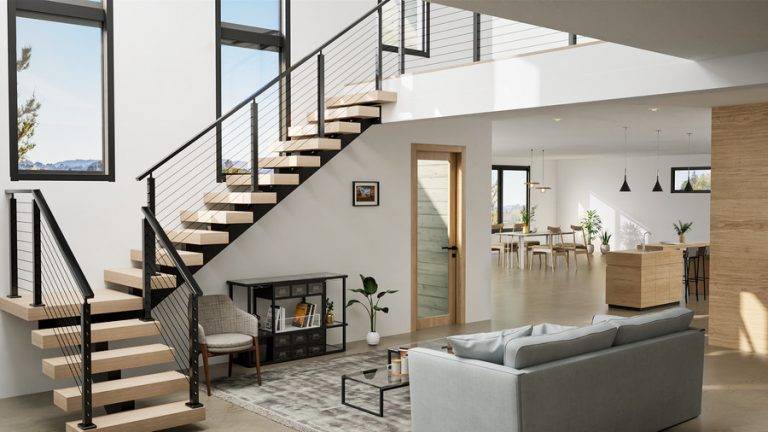
It’s precisely because of the minimalist design that floating staircase is well-received in the design of modern villas or outdoor spaces for those who wish to get a sense of modernity and elegance.
How Are Floating Stairs Supported?
As mentioned above, the reason floating stairs appear to be supported in the air is due to hidden fixtures and support structures. Usually, they are held through several clever designs.
For instance, the single stringer features a central metal or wood beam that runs underneath the treads, providing support while remaining mostly concealed. In contrast, double stringers use two beams along the sides of the treads, which offer added stability yet preserve an open and airy look. Additionally, cantilevered designs anchor treads directly into a wall with hidden metal brackets, achieving an actual floating appearance.
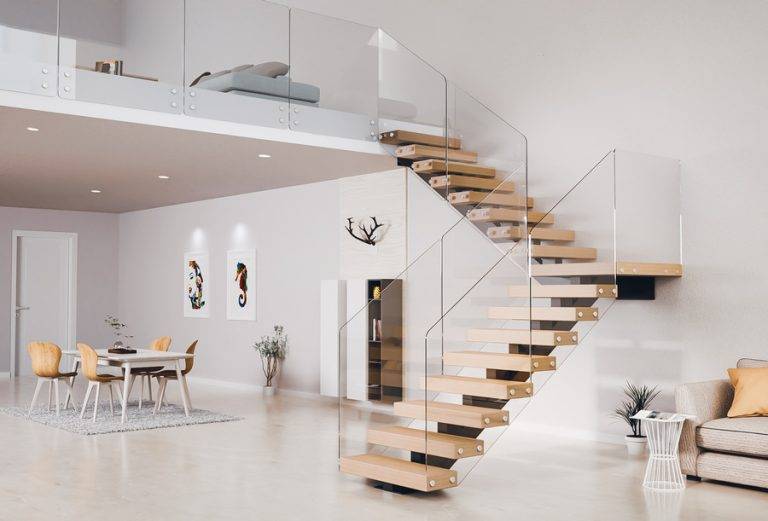
In general, these three patterns are used to support the whole staircase system. Just choose one that suits your needs. Moreover, it would help if you noticed that you’ll typically need a load-bearing wall made of concrete for the cantilevered design.
Main Features of Floating Stairs
As previously noted, you have learned what is a floating staircase and how it is supported. Now, you may wonder about the features of floating stairs and the benefits they can bring to your modern home. You’ve known that stairs appear to float in the air, supported by stringers. The striking design transforms the ambiance of space, creating a sense of openness and lightness.
Float without Visible Support
The distinguishing feature of floating stairs is that they look suspended in midair with no visible support structure. This delusion comes true through ingenious engineering and design techniques. Without any posts or stringers blocking the view, this design creates a feeling of openness and transparency, which is especially beneficial for families with cramped indoor spaces.

Minimalist and Modern design
Known for their clean lines and uncluttered look, floating stairs embody a minimalist and modern aesthetic. The lack of visible risers, stringers, or other structural elements creates a contemporary look. This style can be customized for various scenarios compared to traditional stairs. Whether you’re a homeowner, designer, or builder seeking a personalized staircase, floating stairs can fulfill your needs.
A Sense of Openness and Lightness
Ordinarily, tempered glass, stainless steel, and other lightweight materials are usually used in the construction of floating stairs. This choice not only keeps the stability of the structure but also enhances the overall lightness of design. Moreover, the transparent materials allow light to flow freely, making the space appear larger.
Components of Open Riser Staircase
As a type of modern design, floating stairs differ significantly from traditional staircases. Unlike traditional stairs, which include risers, floating stairs lack this component and are supported by stringers. In addition to the stringer, the open riser staircase have several other key components that are essential to their design. Let’s have a look at them!
Floating Stair Treads
Traditional stairs are typically supported by vertical risers that provide stability for each tread, which usually has a shallower depth. Compared to that, floating stairs’ treads are often thicker than traditional ones to meet load-bearing requirements. This added thickness can avoid excessive deformation or shaking when in use, ensuring security for all users. For instance, Muzata’s floating stair tread often measures between 1.2 inches and 2 inches for protection and comfort whether you opt for single stringer, double stringer, or cantilevered stairs.
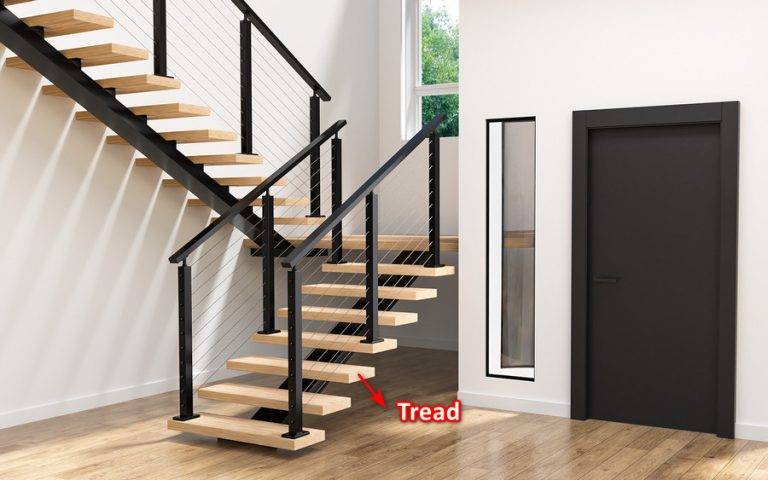
Well, what materials are used for these treads? Typically, they are made from durable materials like wood, stone, or metal. While choosing materials for your floating stairs project, designers will consider structural requirements, the characteristics of space, the budget, and other factors. Wooden treads are particularly popular because of their load-bearing capability, strong flexibility, warm appearance, and cost-effectiveness.
If you don’t have an idea about which type of tread is most suitable for your staircase, consult with your designer or contact our Muzata engineers for guidance.
Floating Stairs Brackets (Stringers)
The floating stairs bracket, also known as the stringer, is the key structural component that plays the most crucial role of support. As previously mentioned, stringers are often concealed within the wall for a cantilevered design or run along the central spine while building a single stringer floating stairs. What’s more, the edge support is commonly used to support the entire staircase when you need a double stringer design.
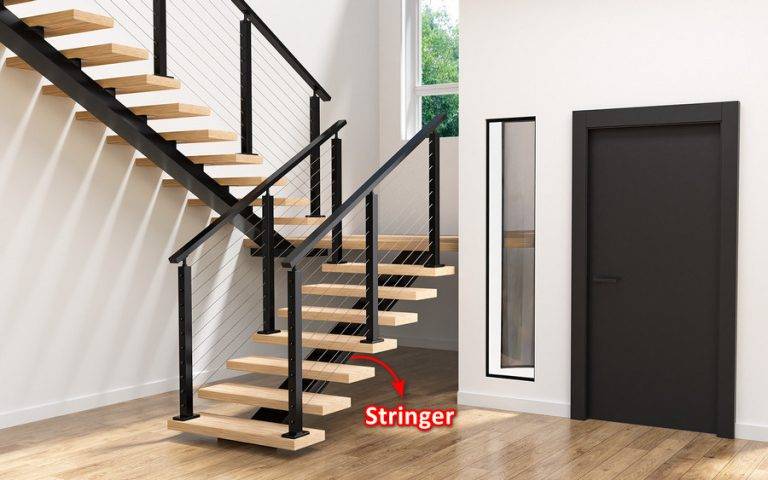
Stringers come in different dimensions. Generally, a hidden stringer underneath the tread measures around 4×7 inches, while dimensions for dual stringer stairs and cantilevered stairs supports vary. All in all, Each style needs specific dimensional structures. Besides that, consider the surface treatment of the brackets, such as sanding, polishing, or coating, based on your needs.
Each support method has its advantages and disadvantages. When choosing, you also need to consider the overall layout of the space, the actual load-bearing requirements, aesthetic balance, and more. Simply assess them yourself or ask a professional to work on your project.
Railing System
What are floating stairs railing? Generally, the railing system in floating stairs is an important safety feature that also contributes to the overall aesthetic. Installing a railing on your staircase helps prevent accidents from falling, especially for this open design that lacks risers.

Railing can be designed with various materials as well, such as cable, glass, metal, or wood. If you prioritize the concept of sustainable development, stainless steel cable railing is an excellent choice. It’s an eco-friendly material that can be recycled. Moreover, glass must be your top option if you wish the floor clamp or stand-off railing.
Ultimately, choosing the right type and material should be based on both functional requirements and aesthetic pursuit.
Different Types of Floating Stairs
Floating Stairs come in various designs and specific structures, each with its own unique characteristics and ideal scenarios. The main types of floating stairs include single stringer, dual stringers, cantilevered design, and zigzag stairs.
Single Stringer Stairs
Mono stringer floating stairs, which use a central stringer to support treads, are among the most commonly used designs. Typically suited for indoor use, these stairs often feature metal materials like stainless steel 304 and 316, offering a sleek and elegant design.

Double Stringer Stairs
Dual stringer stairs, also known as double steel plate staircases, is characterized by their use of two vertical stringers. Positioned on both sides of staircase treads, the two stringers provide robust support for the entire staircase. With a higher bearing capability than single stringer stairs, the dual is perfect for long-span staircase design both indoors and outdoors.
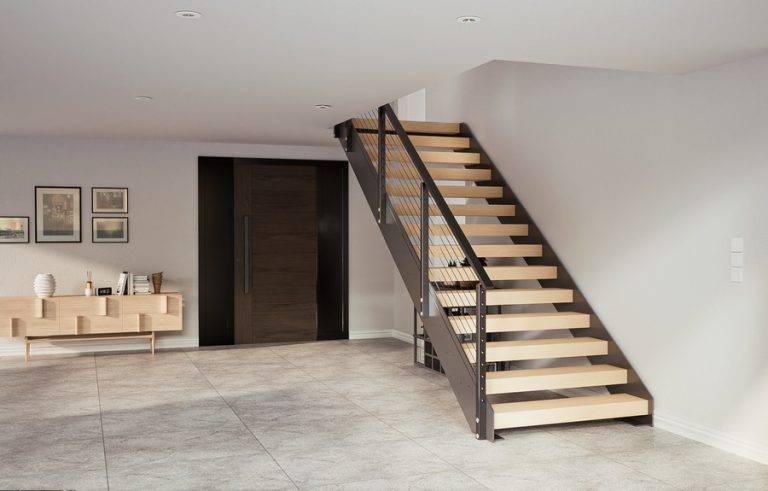
Cantilevered Floating Stairs
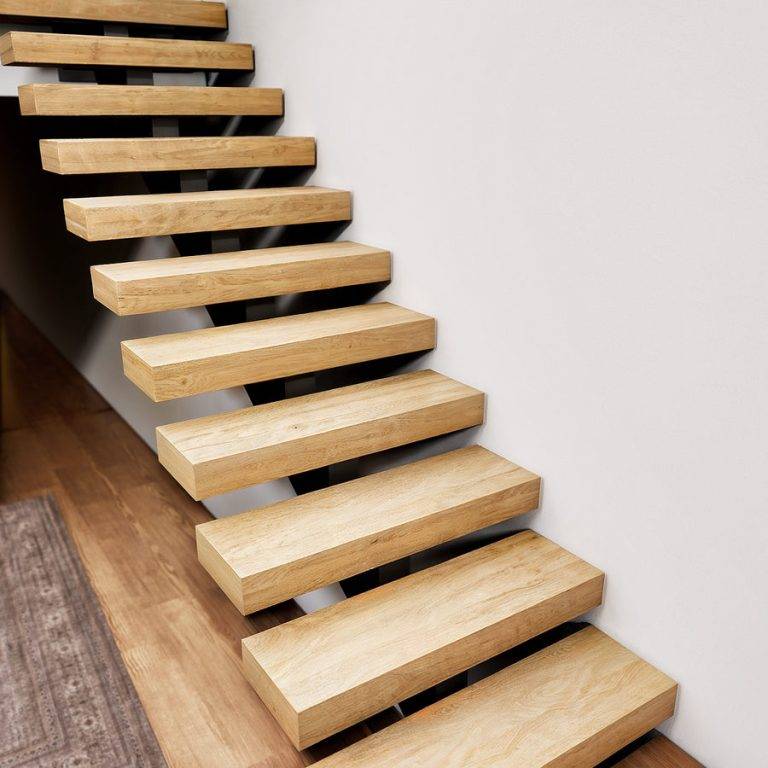
The cantilevered floating staircase takes the concept of open riser design to a whole new level, making it more likely to float in the air. Compared to other types of floating stairs, this style has minimal visible support and is highly admired for its aesthetic. Generally, the treads are directly anchored to the wall, which needs to be exceptionally sturdy. Concrete walls are the most suitable for this construction, as they provide the necessary strength and stability needed to support the cantilevered structure.
Safety Considerations While Installing
While floating stairs provide a modern aesthetic compared to traditional stairs, it’s crucial to consider safety factors before installation. For example, you must install a handrail when you’re in households with elderly individuals and children. Additionally, ensure how far treads should be to prevent slips and falls. Also, you can check the building codes for the proper spacing, usually between 7 to 9 inches, is also advisable. Last but not least, it would be best to use no-slip materials or treatments on your project to enhance safety. Remember to prioritize safety as your primary concern while planning and installing floating stairs.
Common Misconceptions with Open Riser Stairs
There are several misconceptions about floating stairs, such as concerns about safety, cost, and ease of installation. Addressing these misunderstandings is essential for a clear understanding of open riser stairs.
They Are Not Safe
One of the prevalent misunderstandings is that the open riser staircase is unsafe, especially for those with children and the elderly. However, proper design, safety specifications, and compliance with building codes can mitigate this potential risk. These key safety features may include handrail installation, adequate tread depth and non-slip surface. When these guidelines are followed, floating stairs can be as safe as traditional staircases.
They Are Too Expensive
Some individuals believe that the cost of an open staircase must be more expensive than other staircase designs. Indeed, it would be best if you had the extra expertise and specialized materials or an engineer who measures your project before building, but the cost difference isn’t that significant. The investment is generally justified for users seeking high quality and a distinctive visual effects.
They Are Difficult to Install
Many argue that installing floating stairs is more complex than traditional stairs. It requires specialized skills and equipment. Even though some anchors need additional consideration, the setup process is not more challenging than other stairs. With professionals’ guidance and adherence to installation codes, the open riser stairs can be integrated into your modern home without any difficulty.
Cost and Budgeting You Need to Consider
How much do floating stairs cost? In fact, the price can vary widely depending on factors like the materials chosen, design complexity, and installation requirements.
If you are looking to get an accurate estimate, why not try to contact our Muzata engineers for a detailed quote tailored to your project? Simply compare the prices and services offered to help you make an informed decision.
Applications and Use Cases
There’s no denying that floating stairs are widely used in modern homes, lofts, apartments, and cabins, where they devote themselves to creating sustainable architectural design. In commercial spaces, such as office buildings, retail areas, and hotels, this open design can also enhance the contemporary aesthetic. Furthermore, if you’d like to explore more floating stairs ideas and inspiration, you can view our case studies on the Gallery page.
Conclusion
So, what are floating stairs? By now, you should be familiar with the concept of this open riser design. With its unique features, floating stairs can help you achieve a modern look that maximizes space-saving. If you’re interested in this contemporary design, why not start planning and request an estimate today? Our designers are ready to recommend a total solution for your floating stairs project!
FAQ
Are floating stairs safe?
Sure, it’s exactly safe when designed and installed correctly. Thus, you must utilize high-quality materials and follow the safety standards in the installation process.
What do floating stairs look like?
Floating stairs feature treads that appear to hover in the air, supported by hidden stringers or brackets. They often present a sleek and modern design with minimal visible supports.


